È una delle notti insonni durante i mesi della pandemia.
Andrea lavora da sette anni per una nota azienda di prodotti alimentari. Ha una compagna, una carriera e una strada che sembrano dritte e prefissate davanti a sé.
Eppure qualcosa lo tormenta. È davvero questa la vita che vuole vivere?
«Era il 2020, avevo 30 anni e tante domande nella testa. Ero insoddisfatto del mio lavoro e ho capito che i ritmi frenetici di guadagno mi stavano portando lontano dalla felicità. Un giorno ho visto l’annuncio di due Vespe in vendita. Ho chiamato un amico e gli ho chiesto di andarle a vedere.»
Nel giro di una settimana l’affare è concluso. Quella Vespa bianca è sua.
Andrea non ha nessuna esperienza come pilota, ma la sensazione con quel nuovo mezzo è da subito indescrivibile. È libertà pura. Inizia ad andarci al lavoro, poi a fare dei giri più lunghi, fino in Toscana, la terra in cui è nato.
Cosa succederebbe se quella strada già pronta per lui decidesse di non seguirla?
È così che le idee prendono forma. Con la ragazza hanno adottato da tre anni una bambina a distanza, in Bangladesh. Potrebbe andare a conoscerla finalmente. Potrebbe andarci in Vespa. E una volta arrivato potrebbe fermarsi nella stessa ONLUS per dare una mano. Ha già esperienze di volontariato, ma tutte di breve durata. Questa volta – pensa – potrebbe restare senza la fretta di tornare alla vita di sempre.
«Quando ho iniziato a dirlo agli altri, quasi nessuno mi credeva. Solo pochi mi hanno supportato. Mi dicevano che la Vespa non avrebbe retto, che sarebbe stato troppo impegnativo.»
Il 28 luglio parte. Da Pontremoli fa una tappa di saluti a Parma, città dove ha studiato e che l’ha accolto fino a quel momento. Poi Ancona e da lì un traghetto a portarlo sull’altra costa, in Grecia.
«Dei Greci ho imparato l’arte di andare piano, di godersi a pieno le giornate. La Vespa era il mezzo migliore per viaggiare lentamente e non perdere i dettagli in ogni paese che avrei attraversato».
Il rapporto con quella moto è una vera simbiosi. Otto ore al giorno, attraversando un terzo di mondo, lo abituano giorno dopo giorno a un ritmo nuovo: caricare e scaricare la Vespa, piantare la tenda, accontentarsi dello stretto necessario, guidare nel traffico di città sconosciute. Eppure, quella sensazione di allontanarsi, sapendo che ogni giorno arriverà in un posto diverso, incontrerà volti mai visti e assaggerà cibi mai provati, Andrea non la baratterebbe mai.
E quindi, Turchia, poi Iran. Ma l’incontro con quel mezzo non è l’unico inaspettato: sono le persone disposte ad aiutarlo in ogni posto in cui va.
«Scoprire che i Paesi e i popoli non sono come te li raccontano da fuori. Il popolo iraniano è fatto di sorrisi, accoglienza e colori ovunque. A Teheran ho preso del tempo per riposare e far controllare la moto da un Vespa club locale. Moasoud, il presidente, mi ha accolto come in famiglia, aiutandomi in tutto. Ho incontrato molte persone e mi ha colpito la rassegnazione che traspare dai racconti dei giovani, che come tutti i giovani del mondo hanno dei sogni. Vedono la libertà occidentale come un miraggio irraggiungibile. È per incontri come questi che vale la pena rischiare, sapendo che in fondo non si è mai soli.»
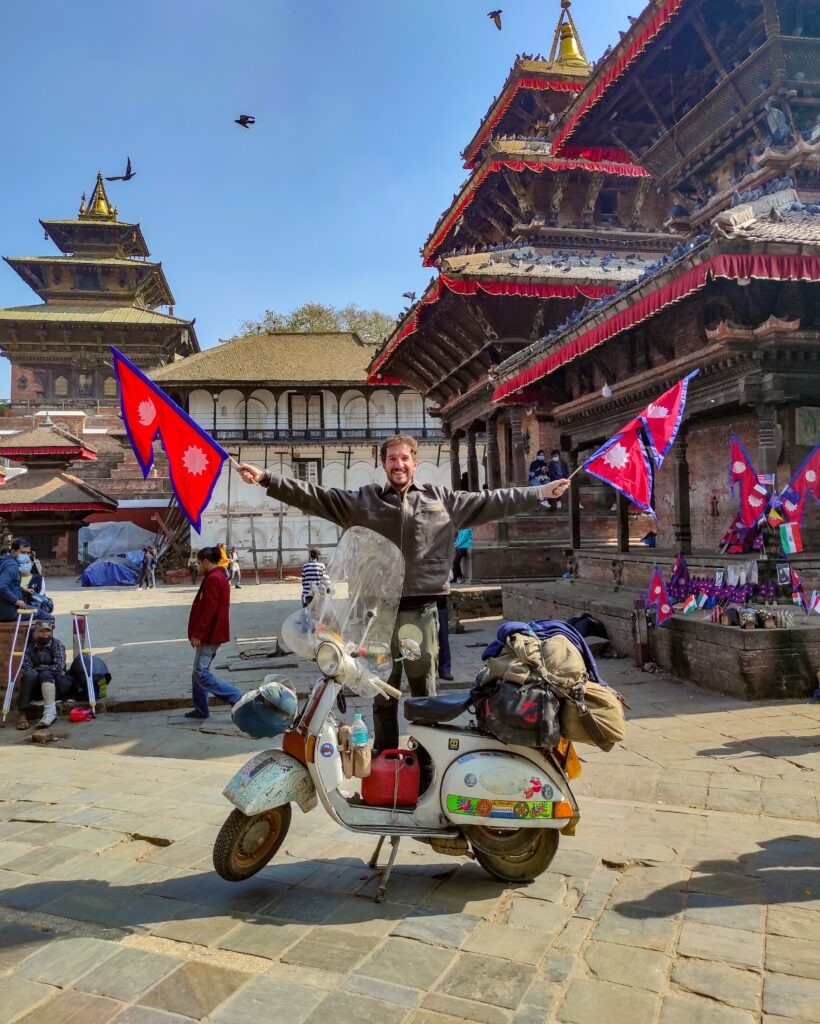
Pakistan, India, Nepal. Andrea prosegue la sua rotta.
Il vento che gli passa sulla pelle, che si insinua sotto il casco, le maniche. Una sensazione che ormai, in quei cinque mesi, è diventata un’abitudine.
La Vespa, fedele compagna di viaggio e il mondo che scivola lentamente sotto di loro.
Sono davvero passati 20.000 km?
Quante lingue, quante facce, religioni, frontiere, albe e tramonti. Città asiatiche intasate dal traffico e brulicanti di vita, rivoluzioni, momenti di disperazione.
«L’idea di una meta mi aveva sempre un po’ spaventato. Ma allo stesso tempo mi dava la forza nei momenti più difficili, quelli in cui l’unica via d’uscita sembrava la rinuncia. Quel puntino sulla mappa, fisso nella mia mente, quella promessa fattami che volevo mantenere a ogni costo. Sarei arrivato in Bangladesh, all’ONLUS, da Kakuli.
Cosa stavo imparando da tutti quei km? Innanzitutto a credere in me stesso. Per un viaggio in solitaria, la forza di volontà è fondamentale. Ma anche ad affrontare i problemi senza approccio fatalista. A volte se non trovavo una soluzione, mi fermavo e aspettavo. Ed è qui che ho imparato a contare sugli altri. La nostra società ci spinge a guardarci come superuomini che risolvono tutto, soli artefici dei successi. Non sono d’accordo. Quando da soli non riusciamo più, basta affidarsi agli altri. Ci sarà sempre qualcuno che si fermerà a bordo strada per spingere la tua Vespa, ti offrirà un pranzo o un tetto, ti presterà un telefono. Mai una volta mi sono sentito solo o abbandonato.»
Quel giorno, 24 dicembre 2022, da poco passata la frontiera del Bangladesh e a soli 10 km dalla meta, Andrea sente il solito vento sulla faccia. Prova una gioia che si avvicina alla felicità più piena. La gioia di un marinaio che vede l’orizzonte e urla «Terra!» dopo mesi di traversata.
Ad accoglierlo Enzo e Laura dell’ONG, che da trent’anni operano per dare alle comunità locali istruzione, acqua pulita, cure mediche. Hanno organizzato una grande festa per il suo arrivo e insieme al villaggio hanno ballato tutta la notte.
È a Natale che conosce finalmente Kakuli.
«Anche quella volta è stata la Vespa a sciogliere la timidezza. Ci siamo seduti sopra insieme e a quel punto ha capito che avevo fatto tutta quella strada per lei.»
Andrea vive la vita del posto, depurando l’acqua per le comunità come volontario. È lontana la routine di sempre, ha il sapore di 20.000 km prima.
Ed è proprio nel villaggio che si innamora di Pia, una delle ragazze aiutate dall’ONG. Dopo sei mesi decide di viaggiare in Asia ancora un po’, visita Malesia e Indonesia, ma è solo tornando in Italia che capisce: il suo animo non è più lì, lo sta chiamando altrove.
A volte quello che la società si aspetta non abita il tuo cuore. Esiste un modo intenso di vivere la vita: sapendo ciò per cui sei destinato. Ci sono mondi che pulsano già dentro di te.
Chiediti cosa desideri davvero. Ascolta quella voce, prendi quella strada.
Quel fuoco esigente di partire, perdersi, ricostruirsi. E poi forse un giorno tornare, mai più uguale ma neppure troppo diverso.
Oggi Andrea lavora per una ONG in Cambogia, si occupa di controllo degli acquiferi. Pia lo ha raggiunto da poco, dopo il matrimonio di otto mesi fa.
~ Translated into English ~
It’s one of those sleepless nights during the pandemic months.
Andrea had been working for seven years at a well-known food products company. He had a partner, a career, and a path that seemed straight and predetermined ahead of him.
Yet something was gnawing at him. Was this really the life he wanted to live?
“It was 2020. I was 30, with a head full of questions. I was unhappy in my job, and I realized the frantic pace of earning money was pulling me further from happiness. One day, I saw an ad for two Vespas for sale. I called a friend and asked him to check them out.”
Within a week, the deal was done. That white Vespa was his.
Andrea had no experience as a rider, but the feeling with this new machine was indescribable from the start. Pure freedom. He started riding it to work, then on longer trips, all the way to Tuscany, the land where he was born.
What if he chose not to follow that ready-made road laid out for him?
That’s how the ideas took shape. He and his girlfriend had been sponsoring a child in Bangladesh for three years. He could finally go meet her. He could ride there on the Vespa. And once he arrived, he could stay on with the same NGO to lend a hand. He had volunteering experience, but always short-term. This time, he thought, he could stay without the rush to return to his old life.
“When I started telling people, almost no one believed me. Only a few supported me. They said the Vespa wouldn’t hold up, that it would be too demanding.”
On July 28, he set off. From Pontremoli, he made a stop in Parma for goodbyes—the city where he’d studied and lived until then. Then Ancona, and from there a ferry across to the other coast, in Greece.
“From the Greeks, I learned the art of going slow, of savoring every day to the fullest. The Vespa was the perfect way to travel slowly and not miss the details in every country I passed through.”
His bond with that bike was true symbiosis. Eight hours a day, crossing a third of the world, gradually attuned him to a new rhythm: loading and unloading the Vespa, pitching the tent, making do with the bare essentials, navigating the traffic of unknown cities. Yet that sensation of pulling away—knowing each day he’d arrive somewhere new, meet unfamiliar faces, taste foods he’d never tried—Andrea wouldn’t trade it for anything.
And so, Turkey, then Iran. But the unexpected encounters weren’t just with the machine: they were the people willing to help him everywhere he went.
“I discovered that countries and peoples aren’t what they’re made out to be from the outside. The Iranian people are all smiles, hospitality, and color everywhere. In Tehran, I took time to rest and had the bike checked by a local Vespa club. Moasoud, the president, welcomed me like family and helped with everything. I met so many people, and what struck me was the resignation in the young folks’ stories—they have dreams like young people everywhere, but they see Western freedom as an unattainable mirage. It’s encounters like these that make the risk worthwhile, knowing deep down you’re never truly alone.”
Pakistan, India, Nepal. Andrea pressed on.
The wind rushing over his skin, slipping under his helmet, up his sleeves. A sensation that, after those five months, had become habit.
The Vespa, his faithful travel companion, and the world sliding slowly beneath them.
Had it really been 20,000 km?
How many languages, faces, religions, borders, sunrises, and sunsets. Asian cities choked with traffic and bursting with life, revolutions, moments of despair.
“The idea of a destination had always scared me a bit. But it also gave me strength in the toughest moments, when giving up seemed like the only way out. That dot on the map, fixed in my mind—that promise I’d made to myself and was determined to keep at all costs. I’d make it to Bangladesh, to the NGO, to Kakuli.
What was I learning from all those kilometers? First, to believe in myself. For a solo journey, willpower is everything. But also to face problems without a fatalistic attitude. Sometimes if I couldn’t find a solution, I’d stop and wait. That’s when I learned to rely on others. Our society pushes us to see ourselves as superhumans who solve everything alone, sole architects of our successes. I disagree. When you can’t manage on your own anymore, just lean on others. There will always be someone who stops by the roadside to push your Vespa, offers you a meal or a roof, lends you a phone. I never once felt alone or abandoned.”
That day, December 24, 2022—just past the Bangladesh border and only 10 km from his goal—Andrea felt the familiar wind on his face. A joy bordering on pure happiness welled up. The joy of a sailor spotting the horizon and shouting ‘Land!’ after months at sea.
Enzo and Laura from the NGO welcomed him—they’d been working for thirty years to bring local communities education, clean water, medical care. They’d organized a huge party for his arrival, and the whole village danced all night.
It was Christmas when he finally met Kakuli.
“Even then, it was the Vespa that broke the ice. We sat on it together, and that’s when she realized I’d come all that way for her.”
Andrea lived the local life, volunteering to purify water for the communities. His old routine felt like a distant memory, 20,000 km away.
And it was in the village that he fell in love with Pia, one of the girls helped by the NGO. After six months, he traveled a bit more through Asia—Malaysia, Indonesia—but it was only back in Italy that he realized: his heart wasn’t there anymore. It was calling him elsewhere.
Sometimes what society expects doesn’t live in your heart. There’s an intense way to live life: knowing what you’re meant for. There are worlds already pulsing inside you.
Ask yourself what you truly want. Listen to that voice, take that road.
That insistent fire to leave, to get lost, to rebuild yourself. And then maybe one day return—never the same, but not entirely different either.
Today, Andrea works for an NGO in Cambodia, managing aquifer control. Pia joined him recently, after their wedding eight months ago.