A volte non è lo guardo a mancare, ma il respiro. Lo stesso posto, le stesse abitudini finiscono per stancarti. Ti accorgi che non hai più tempo da dedicare a una vita in cui non ti riconosci.Cambiare non significa fuggire, ma concederti una nuova luce con cui guardare il mondo: nuove possibilità, il diritto di ricominciare.
È il momento in cui ti chiedi davvero cosa vuoi. Ed è lì che smetti di soffocare il cuore.
“A ventiquattro anni mi sono chiesto: Ma se la mia vita fosse un’opera d’arte, andrei a vederla?”.È il 2018. Nicolò si sta per laureare in Economia, ha entusiasmo e dei sogni. Fra questi, quello di scrivere un libro. Ama camminare e il giro del mondo a piedi gli sembra un buon modo per raccogliere storie e capire cosa significhi vivere una vita bella.
Non sa ancora come, ma inizia a elaborare, a cercare informazioni e nel farlo scopre Ezio, un passeggino a tre ruote che diventerà il suo vero compagno di viaggio. Su di lui caricherà il peso di tutto il necessario per cavarsela giorno e notte.
Studia scrupolosamente percorsi, visti, condizioni climatiche e sociali dei luoghi e dei paesi da attraversare. Questa ricerca gli chiederà circa due anni.
Nel frattempo si laurea, inizia a lavorare e setta la partenza per il 3 maggio 2020. Sarà il Covid a congelare e rimodificare i piani per un po’.
Eppure dal 23 febbraio, giorno in cui si licenzia, la preparazione del cammino diventa la sua unica occupazione, il suo unico obiettivo. Aspetta quella partenza come nient’altro.
Così il 9 agosto è il momento. Comincia la camminata in direzione Spagna, verso ovest, dove il giorno finisce. È in quei primi passi che anche la vecchia vita inizia a tramontare.
“All’inizio, il primo anno e mezzo, speravo di non finirlo, perché avrebbe significato trovare un posto dove fermarmi, una persona con cui stare. Poi andando avanti è diventato più importante riuscire a scrivere tutta la storia”.
Dall’Europa Nicolò sale su una barca a vela spinta dagli alisei fino ai Caraibi. Poi Ecuador, Perù e Cile.
A causa di un visto è costretto a ritardare l’Australia per un anno. Decide allora di fare una deviazione: da Santiago del Cile cammina fino a Ushuaia, aggiungendo altri 5000 km.
Non sempre le cose che non vanno secondo i piani sono un male. È lì infatti, in quella terra calda del Sud America che Nicolò si sente a casa. Che pensa forse un domani di farvi ritorno.
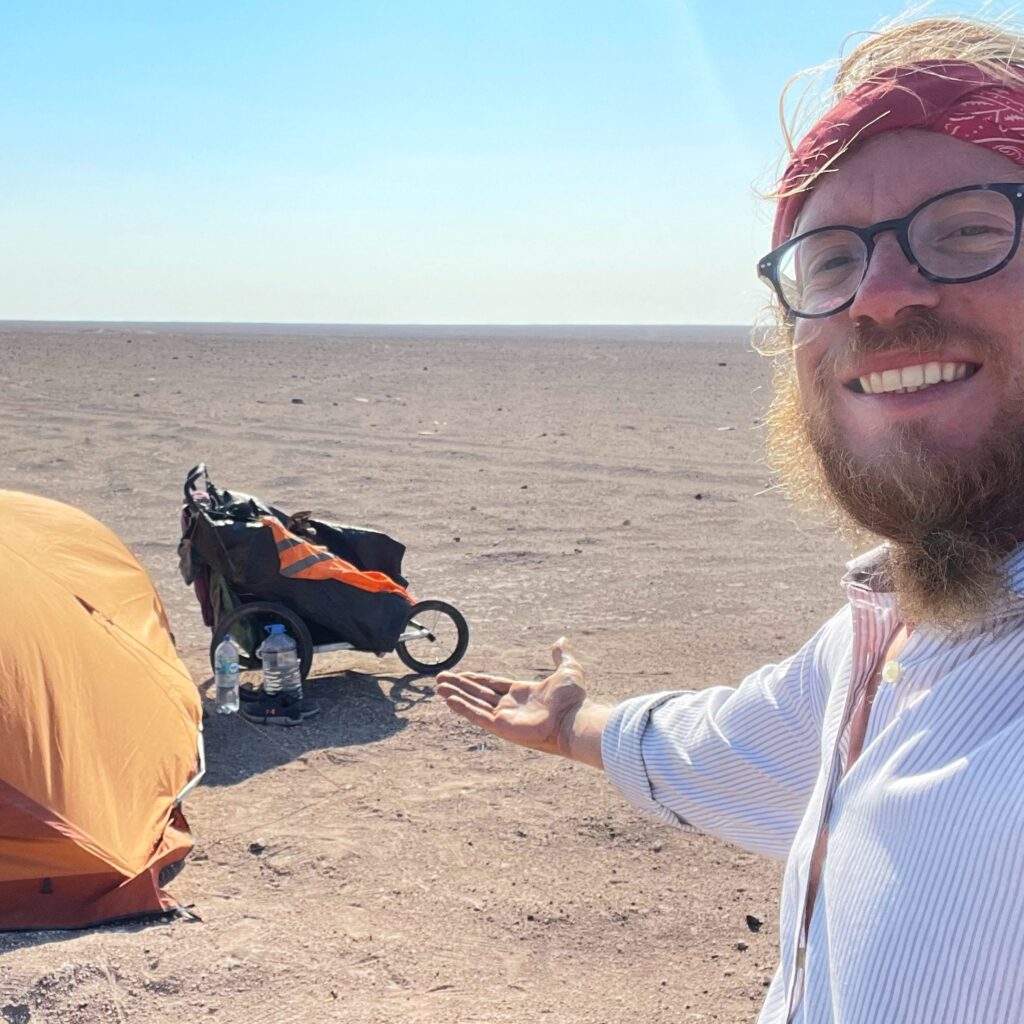
Nel deserto australiano è il punto in cui è più solo. Spesso non ha connessione per giorni, settimane, non vede nessuno, parla con Ezio. Sa di essere ancora a metà della strada. Che rivedrà famiglia e amici non prima di due anni. Ma non c’è nostalgia che lo fermi. Quello è il suo viaggio e lui non ha nessuna intenzione di rinunciarci.
“A volte arrivavi alla sera, montavi la tenda, ti guardavi attorno e non c’era niente. Nulla di umano. E pensavi: sono proprio pazzo. Cosa ci faccio qui? Però era una sensazione bellissima, quel brivido della vita, dell’avventura. Che roba assurda che sto facendo. A piedi, dall’altra parte del mondo. E quando me lo ricordavo, mi dicevo: sì, questa cosa ha senso e ne sono felice”.
Più della metà del tempo Nicolò l’ha passato da solo. Ma sa che senza le donazioni e l’aiuto di chi lo ha ospitato sarebbe stata molto più dura.
“Avevo appena attraversato il confine con gli Emirati Arabi, arrivavo dall’Oman. Un tipo mi affianca in auto e mi chiede dove stessi andando. Quella notte c’era allerta meteo. Gli dico che avrei piantato bene la tenda, invece lui mi porta a casa sua, mi fa mangiare, fare la doccia. Mi fa conoscere la sua famiglia. Poi per un’emergenza di lavoro deve andare via, ma dato che mi aveva promesso un tetto mi prenota un albergo per due notti. Fuori da certi paesi si capisce ancora cosa significhi essere esposti alla strada, alla fatica, ai pericoli. C’è più compassione, più tempo. Forse perché si va più lentamente. E allora è più facile comportarsi da umani”.
È il 13 settembre 2025 quando Nicolò varca la soglia di casa. Sono passati cinque anni. Dopo India, Medio Oriente, Europa e 36000 km percorsi. Ci sono centinaia di persone ad aspettarlo. Le tappe registrate nel quaderno sono 1001. In quella strada ci sono talmente tanti incontri, vite e momenti da non riuscire a ricordarli tutti.
Lui ancora non sa cosa ha fatto, ma il suo sogno l’ha concluso. Non c’è alcun vuoto da colmare. Quella fiamma è bruciata a sufficienza.
A volte i sogni sono messi lì solo per spingerti verso i tuoi limiti. Per osare. Per essere liberi. Non per forza c’è una fiamma nuova ad attenderti. A volte ti accorgi che il sogno ti è servito a partire. A condurti in posti mai visti. A parlare con persone che non avresti incontrato.
E se anche oggi non sembra molto, ricorda che il sogno ti ha dato il viaggio.
Che il viaggio non è nella fine. Ma è il senso di tutto. È la vita in sé.
~ Translated into English ~
Sometimes it’s not the view you miss, but the breath. The same place, the same habits end up wearing you out. You realize you no longer have time to devote to a life in which you no longer recognize yourself.
Changing doesn’t mean escaping—it’s granting yourself a new light through which to see the world: new possibilities, the right to start over. It’s the moment when you truly ask yourself what you want. And that’s when you stop suffocating your heart.
“At twenty-four, I asked myself: If my life were a work of art, would I go see it?”
It’s 2018. Nicolò is about to graduate in Economics, full of enthusiasm and dreams. Among them, the dream of writing a book. He loves walking, and circling the world on foot seems like a good way to gather stories and understand what it means to live a beautiful life.
He doesn’t yet know how, but he starts planning, researching information, and in doing so discovers Ezio—a three-wheeled stroller that will become his true travel companion. On it, he’ll load everything needed to get by day and night.
He meticulously studies routes, visas, weather and social conditions in the places and countries he’ll cross. This research takes him about two years.
In the meantime, he graduates, starts working, and sets the departure for May 3, 2020. COVID freezes and reshapes the plans for a while.
Yet from February 23—the day he quits his job—preparing for the walk becomes his sole occupation, his only goal. He awaits that departure like nothing else.
So August 9 is the moment. He begins walking toward Spain, westward, where the day ends. It’s in those first steps that his old life also begins to fade.
“In the beginning, for the first year and a half, I hoped not to finish it, because that would mean finding a place to stop, a person to be with. Then, as I went on, it became more important to complete the whole story in writing.”
From Europe, Nicolò boards a sailboat carried by the trade winds to the Caribbean. Then Ecuador, Peru, and Chile.
Due to a visa issue, he has to delay Australia by a year. So he decides on a detour: from Santiago, Chile, he walks to Ushuaia, adding another 5,000 km.
Not everything that doesn’t go according to plan is a bad thing. It’s in that warm land of South America, in fact, that Nicolò feels at home. That he thinks he might return there someday.
In the Australian desert is where he’s most alone. Often without connection for days, weeks, seeing no one, talking to Ezio. He knows he’s still halfway. That he won’t see family and friends for at least two more years. But no nostalgia stops him. That’s his journey, and he has no intention of giving it up.
“Sometimes you’d arrive in the evening, set up your tent, look around, and there was nothing. Nothing human. And you’d think: I’m crazy. What am I doing here? But it was a beautiful feeling, that thrill of life, of adventure. What crazy stuff I’m doing. On foot, on the other side of the world. And when I remembered that, I’d tell myself: yes, this makes sense, and I’m happy.”
More than half the time, Nicolò spent alone. But he knows that without donations and the help of those who hosted him, it would have been much harder.
“I’d just crossed the border into the United Arab Emirates, coming from Oman. A guy pulls up beside me in his car and asks where I’m going. There was a weather alert that night. I tell him I’d pitch the tent well, but instead he takes me home, feeds me, lets me shower. Introduces me to his family. Then he has to leave for a work emergency, but since he’d promised me a roof, he books me a hotel for two nights. Outside certain countries, you really understand what it means to be exposed to the road, to fatigue, to dangers. There’s more compassion, more time. Maybe because things move more slowly. And then it’s easier to act human.”
It’s September 13, 2025, when Nicolò crosses his home threshold. Five years have passed. After India, the Middle East, Europe, and 36,000 km traveled. The stages recorded in his notebook number 1,001. On that road are so many encounters, lives, and moments that he can’t remember them all.
He still doesn’t know what he’s done, but he’s completed his dream. There’s no void to fill. That flame has burned enough.
Sometimes dreams are there just to push you to your limits. To dare. To be free. Not necessarily a new flame awaits you. Sometimes you realize the dream served to make you leave. To lead you to unseen places. To talk to people you never would have met.
And if even today it doesn’t seem like much, remember that the dream gave you the journey.
That the journey isn’t in the end. But is the meaning of it all. It is life itself.