My name is Sofia, and I am an Astrophysicist. More specifically, I am an Experimental Cosmologist. This means I try to answer big questions like “what happened at the beginning of the universe?” and build instruments and collect data to provide those answers.
Having attended a classical high school, I discovered physics relatively late, during my penultimate year. It was definitely love at first sight. I spent those last two years eagerly awaiting my weekly math and physics classes; this made starting university even more special, when I began studying physics all day, every day.
I applied for a PhD in Canada almost as a whim. Then I was accepted and started thinking: “What would happen if I moved alone to the other side of the world, to a place I’ve never been and where I know no one?” This thought opened so many possibilities in my mind that it was impossible to contain my curiosity and excitement. In the end, I really did it. Now, I’ve been living in North America for over eight years.
I regularly travel to Antarctica because the experiment I work on is located at the South Pole, and I am part of the team that designed, built, tested, and installed it. The experiment is called BICEP Array, a telescope that observes the sky in microwaves, with the goal of measuring primordial gravitational waves and testing the theory of inflation, which describes the “Bang” of the Big Bang.
At the moment, I am in Antarctica on my fifth mission.
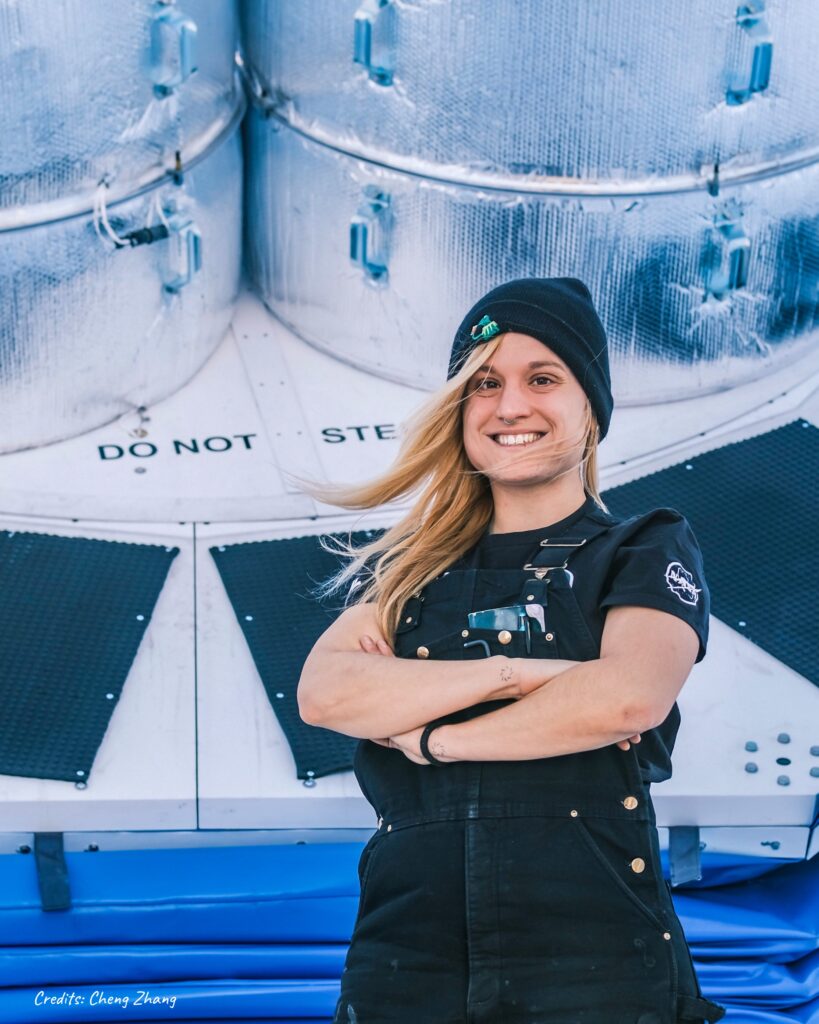
Antarctica is a unique experience, as challenging as it is rewarding. One of the most beautiful things for me is the silence, along with the endless emptiness of that white desert known as the Antarctic plateau.
I quickly realized how much I like that feeling of isolation. It gives me a sense of peace and distance from the chaos of the world.
Sometimes civilization creates anxiety in me, which completely disappears for the time I spend here, allowing me to focus only on the things important to me, among which science is, of course, the foremost.
No matter what happens during my day, Astrophysics is the only thing that always makes me happy. All I have to do is open a book and start reading something, watch a documentary, or reread some old notes, and I immediately feel that enthusiasm we have as children when discovering something new. It has always made me feel this way, and that hasn’t changed.
The vastness of the universe, compared to our own, is a difficult concept to describe. Surely, astrophysics gives a great sense of how small and insignificant we are on the spatial and temporal scales of the Universe. But it’s a beautiful thing because it also makes me feel part of something much bigger than myself.
Think of the present as if it were almost all you have. Living is a bit like surfing: you can neither control nor predict the waves that come, you can only try to ride them as best as you can and, above all, enjoy yourself while doing it. Because having fun is the key to success.
~ Italian version ~
Mi chiamo Sofia e sono un’Astrofisica. Per la precisione sono una Cosmologa Sperimentale. Questo significa che cerco di rispondere a grandi domande come “cosa è successo all’inizio dell’Universo?” e che costruisco strumenti e raccolgo dati per fornire delle risposte.
Avendo fatto il liceo classico, ho scoperto la fisica relativamente tardi, durante il penultimo anno di liceo. È stato sicuramente amore a prima vista. Ho passato quei due ultimi anni ad aspettare con ansia le ore settimanali di matematica e fisica; questo ha reso ancora più bello il momento in cui poi sono passata all’Università, e ho iniziato a studiare fisica tutto il giorno, tutti i giorni.
Ho fatto domanda per un dottorato in Canada, quasi per gioco. Poi sono stata accettata e ho cominciato a pensare: “Chissà cosa succederebbe se mi trasferissi da sola dall’altra parte del mondo, in un posto in cui non sono mai stata e dove non conosco nessuno?”. Questo pensiero ha aperto così tante possibilità nella mia mente che è stato impossibile contenere curiosità e entusiasmo. E alla fine l’ho fatto davvero. Ora da più di otto anni, vivo in Nord America.
Vengo in Antartide regolarmente perché l’esperimento per cui lavoro si trova al Polo Sud, e io faccio parte del team che l’ha progettato, costruito, testato e poi installato. L’esperimento si chiama BICEP Array ed è un telescopio che osserva il cielo nelle microonde, con l’obiettivo di misurare onde gravitazionali primordiali e testare la teoria dell’inflazione, ovvero la teoria che descrive il “Bang” del Big Bang.
L’Antartide è un’esperienza unica, tanto difficile quanto gratificante. Una delle cose più belle per me è il silenzio, insieme al nulla sconfinato di quel deserto bianco che è l’altopiano antartico.
Mi sono velocemente accorta di quanto mi piaccia quella sensazione di isolamento. Mi dà un senso di pace e di distacco dal caos del mondo.
A volte la civiltà mi crea un senso di ansia, che sparisce completamente per il tempo che passo qui, permettendomi di concentrarmi solo sulle cose importanti per me, tra cui ovviamente al primo posto c’è la scienza.
Qualsiasi cosa succeda durante la mia giornata, l’Astrofisica è l’unica cosa che mi rende sempre felice. Basta che io apra un libro e mi metta a leggere qualcosa, guardi un documentario o rilegga vecchi appunti, immediatamente sento quell’entusiasmo che si prova da bambini quando si scopre qualcosa di nuovo. Mi ha sempre fatto sentire così, e ancora questo non è cambiato.
La grandezza dell’Universo, rispetto alla nostra, è un concetto difficile da descrivere. Sicuramente l’astrofisica dà un’ottima idea di quanto siamo piccoli e poco importanti nelle scale spaziali e temporali dell’Universo. Ma è una cosa bellissima, perché mi fa sentire parte di qualcosa molto più grande.
Pensa al presente come se fosse quasi tutto ciò che hai. Vivere è un po’ come surfare: non puoi controllare né prevedere le onde che arrivano, puoi solo cercare di surfarle al meglio e, soprattutto, di divertirti al massimo mentre lo fai. Perché divertirsi è la chiave del successo.